
Sildenafil, Food and Alcohol: What Changes?
Food can delay licensed sildenafil tablets, while heavier alcohol use can worsen dizziness and make erectile response harder. Here is how to read those effects.
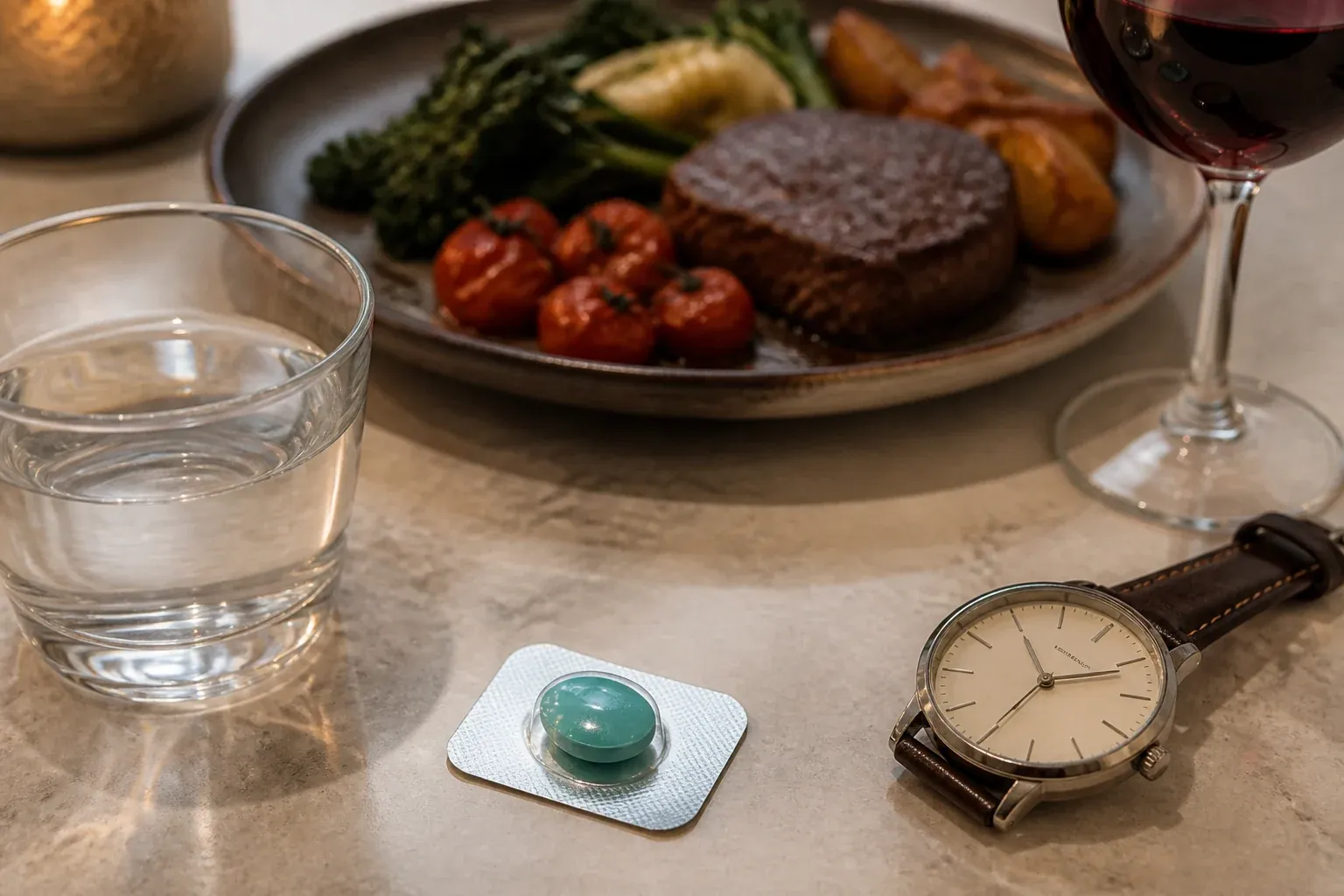
A meal may move the response later
The referenced sildenafil label says food delays the time to peak concentration. That does not mean every meal cancels the medicine or that everyone experiences the same delay. It means a post-meal clock estimate is less reliable than a rigid “works in 30 minutes” promise suggests.
Claims that a jelly, chewable or effervescent product avoids the food effect need evidence for that exact formulation. A different texture is not enough.
Alcohol is not a simple yes-or-no rule
NHS guidance says drinking lots of alcohol can make it harder to get an erection, which works against the reason sildenafil is being used. Sildenafil can also cause dizziness and lower blood pressure; alcohol may add to those effects for some people.
That is different from saying a single drink always makes sildenafil fail. The useful approach is to ask a clinician or pharmacist about personal risk, especially with low blood pressure, heart conditions or other medicines.
Three myths worth dropping
- “It was late, so I should take another.” A delayed response is not permission to repeat a dose.
- “A different format ignores food.” That requires exact-formulation evidence.
- “More alcohol means less anxiety and a better result.” Larger amounts can impair arousal and erectile response.
If sildenafil repeatedly seems ineffective, review the diagnosis, dose, timing, food, alcohol and other medicines with a prescriber. Do not solve uncertainty by combining PDE5 products or increasing the dose yourself.
Sources
- Electronic Medicines Compendium: sildenafil SmPC
Food-effect, dose and safety information for a licensed sildenafil tablet.
- NHS: Common questions about sildenafil
Patient guidance on alcohol and erectile response.
Medically reviewed byDr Chong Kian Tai(Urologist, Singapore)